





Supply chain & customer service: enabling customer-centric excellence at Gnosis by Lesaffre
At the heart of Gnosis by Lesaffre‘s mission to transform scientific innovation into real-world impact is a deep commitment to the principles of balance, adaptability, and resilience. Just as these qualities are fundamental to the natural systems that inspire our work, they also guide the design and operation of our Supply Chain and Customer Service organization.

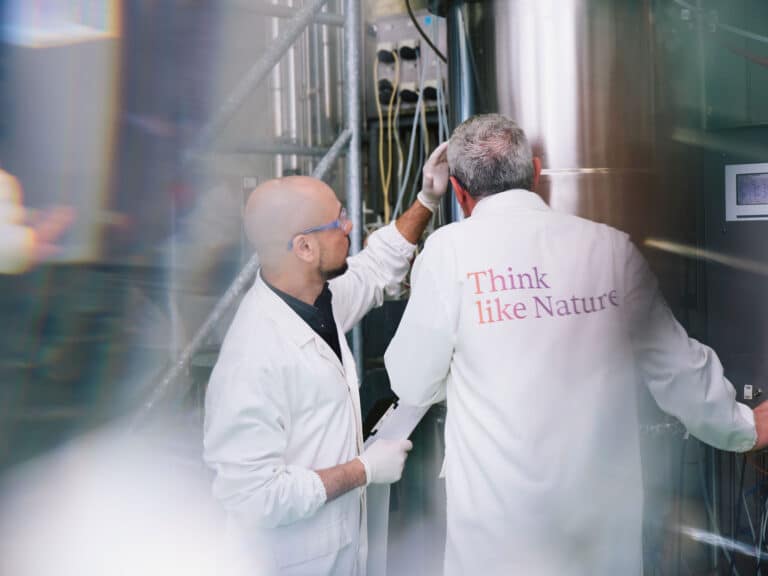
A strong quality-driven framework underpins both Supply Chain and Customer Service activities, incorporating rigorous feasibility assessments, meticulous monitoring plans, and comprehensive quality assurance and control processes. This approach ensures that products meet customer specifications and comply with all applicable regulations, reinforcing Gnosis’s commitment to excellence across the entire customer journey.

Supply chain excellence supporting customer confidence
A supply chain designed for reliability in regulated markets
A reliable, high-quality supply chain is a key pillar of Gnosis by Lesaffre’s value proposition, enabling partners to stay ahead in highly regulated and innovation-driven markets. Our Supply Chain is designed to support long-term customer confidence by ensuring consistency, availability, and operational reliability.
This reliability is built on a global vision and a strong regulatory and scientific framework. Gnosis’s health solutions are supported by robust science and rigorous clinical validation. We collaborate with a global academic network to ensure our solutions meet the highest scientific standards, and we work with partners using advanced scientific technologies to deliver solutions that are precise, safe, and proven effective.
Pharma-grade manufacturing and fermentation expertise securing supply
This scientific and regulatory framework is supported by large-scale, pharma-grade manufacturing capabilities. Gnosis by Lesaffre’s ingredients are produced in European manufacturing sites certified cGMP, fully compliant with applicable regulations. Continuous investment in production facilities—across locations such as Poland, Denain, and Italy—supports capacity expansion and secures ingredient availability for customers worldwide.
As part of the Lesaffre group, Gnosis also benefits from more than 170 years of expertise in fermentation and biotechnological innovation. This close relationship provides a strong base of scientific expertise, operational excellence, and a shared vision of sustainability and innovation, creating a long-term competitive advantage for both Gnosis and its partners.

Integrated capabilities enabling scalable, market-ready solutions
Building on these capabilities, Gnosis operates a fully integrated manufacturing model covering the entire value chain—from raw materials to finished private-label products, as well as bespoke contract manufacturing solutions.
By working closely with customers, we transform challenges and requirements into effective, market-ready solutions, making development smoother, faster, and more efficient.
To support ongoing growth and increasing customer expectations, Gnosis continues to strengthen its Supply Chain organization. Recent initiatives include the development of regional hubs to improve local insight and responsiveness, a more structured Sales & Operations Planning (Supply & Demand) process, and enhanced Supply Chain analytics through KPI tracking. Together, these efforts reinforce operational agility, proximity to customers, and the ability to deliver consistently at a global scale.

Customer proximity: Global presence and regional agility
Gnosis supports customers worldwide through a structured international commercial and service network. With headquarters in France and Italy and commercial teams located in the United States, Switzerland, Italy, India, and China, the organization combines global reach with strong regional proximity.
To further strengthen customer engagement and responsiveness, Gnosis has developed dedicated regional hubs. These hubs are designed to bring Supply Chain and Customer Service coordination, and commercial decision-making closer to local markets, enabling faster responses and a deeper understanding of customer needs.
The Americas Hub illustrates this approach, with reinforced regional resources across marketing, operations, and customer support.
This organization enables Gnosis to better understand local challenges, enhance agility, and ensure a consistent level of service aligned with global standards.
With operations deployed across the entire world, Gnosis can deliver solutions anywhere, at any time.

Customer service: From support to long-term partnerships
A single point of contact coordinating complex customer needs
Customer Service at Gnosis goes beyond transactional support. It plays a strategic role in building long-term partnerships by acting as the central interface between customers and internal teams.
In practice, this role becomes particularly visible in complex or time-critical situations, where Customer Service coordinates supply, production, quality, and logistics to secure reliable outcomes for customers.
This evolution reflects Gnosis’s transformation from a biotechnology leader to a true partner in health innovation, guided by continuous customer listening and a strong focus on customer centricity.
Extending customer service beyond direct interactions
The recent deployment of Saf-Force, a new customer relationship management tool inspired by Salesforce, marks a key milestone in this transformation. Saf-Force supports a service-oriented model by unifying data, applications, and teams, enabling greater visibility across customer interactions and improving coordination. The objective is not only to optimize support, but to enhance every interaction and deliver a superior overall customer experience—placing customer needs at the heart of all priorities.

A solution-driven digital ecosystem designed around customer needs
This approach is reinforced by the redesign of the Gnosis website, which places the user experience at the center. By shifting from ingredient-focused messaging to a solution-driven approach, the digital ecosystem anticipates customer questions, aligns with purchasing considerations, and integrates educational resources. Together, these touchpoints reflect Gnosis’s ambition to be more than a supplier: a trusted resource and collaborative partner committed to shared success.
The customer solution center: Bridging science and customer value
This partnership-driven approach is further strengthened by the Customer Solution Center (CSC), a dedicated team designed to connect customers directly with Gnosis’s scientific and technical expertise.
The CSC supports co-development initiatives by structuring scientific data, translating R&D knowledge into actionable strategies, and ensuring that technical insights are communicated through a customer-focused lens.
Its close integration with Salesforce enables a collaborative environment, faster response times, and improved reuse of existing solutions. As a result, customers benefit from greater agility, proactive support, and a technical support process designed to match the quality of Gnosis’s ingredients.
By connecting scientific expertise with customer needs, the Customer Solution Center enables the transformation of challenges into opportunities while revealing new and still unexplored growth levers.

Supply chain & customer service in action: Delivering operational reliability
At Gnosis, Supply Chain and Customer Service operate as an integrated system designed to translate customer requirements into reliable operational outcomes. This complementarity is most evident in complex or critical situations, where cross-functional coordination, responsiveness, and execution directly impact customer performance.
Customer Service plays a key role in carrying the customer’s voice across all internal teams at Gnosis. It translates complex requests and constraints into clear, prioritized, and directly actionable operational instructions for the relevant functions.
From the identification of needs through to delivery, Customer Service provides structured oversight by defining timelines and formalizing the workflows required to meet expectations.

In doing so, it enables strong coordination across production, quality, logistics, and supply, supporting identified priorities and ensuring reliable, timely execution.
The examples below illustrate how Customer Service, working closely with Supply Chain, helps secure operational execution across a range of situations, including constrained or critical contexts.
Case study 1: Anticipating pickups through improved process synchronization
A key customer was facing extended pickup lead times due to the sequential nature of internal validation steps. As transportation could only be organized once all stages were completed, pickup timelines were extended by approximately two to three weeks.
Customer Service structured a clear workflow shared across all involved functions and defined precise timelines for each step. This visibility enabled the customer to work in parallel with their own logistics team and anticipate transportation planning.
As a result, inventory holding was reduced and shipments were secured within expected timelines, limiting the risk of stock-outs. The customer particularly valued the increased efficiency and the reliability of the organization put in place.
Case study 2: Responding rapidly to secure production continuity
Following a warehouse fire, a customer was confronted with an immediate stock-out, directly threatening its planned production. Faced with this critical situation, the customer requested support from Gnosis.
Customer Service immediately mobilized the relevant internal stakeholders and coordinated supply, production, and quality teams to prioritize the order. Material was shipped within 48 hours of the request.
This rapid response enabled the customer to maintain its production plan without disruption.
In a similar context, this same ability to mobilize quickly also allowed another customer to seize a business opportunity that depended on accelerated delivery.
Case study 3: Improving reliability for long, complex production cycles
A customer ordering an ingredient with a particularly long and complex production process faced ongoing challenges in managing orders, especially in obtaining precise shipping dates needed to plan internal operations.
Customer Service implemented a detailed, step-by-step workflow involving planning, purchasing, quality, external warehousing, and analytical laboratories. This shared framework aligned teams around a clear process and defined timelines.
While production lead times remain inherently long, this organization now enables the communication of reliable—and in some cases anticipated—shipping dates. This improved visibility has strengthened the customer’s planning capabilities and enhanced overall operational efficiency.
Across these situations, Customer Service acts as the interface that captures customer constraints and priorities, while the Supply Chain provides the capabilities, coordination, and operational discipline required for execution. Together, these functions ensure continuity of supply, delivery reliability, and the ability to respond effectively to unforeseen events—key pillars of long-term, trust-based customer partnerships.
A shared commitment to long-term customer partnerships
Supply Chain and Customer Service are central pillars of how Gnosis supports long-term customer partnerships. Designed to work as one integrated system, they enable reliable global delivery, operational agility, and consistent service quality across markets.
By combining customer-centric processes, digital enablement, regional proximity, and a robust quality framework, Gnosis ensures that innovative, customized health solutions can be delivered reliably and at scale. This integrated model supports customer confidence, regulatory compliance, and long-term performance.
Beyond structured processes and organization, this approach is reflected in daily interactions. Customers value having a reliable and responsive point of contact, capable of anticipating potential issues and proposing appropriate solutions. Internal stakeholders, particularly sales teams, also recognize Customer Service as a key support function, facilitating execution and reinforcing collaboration across the organization.
Guided by the principle of Think like Nature, Gnosis applies the same logic of balance, adaptability, and resilience found in natural systems to its Supply Chain and Customer Service organization. Together, these functions help transform scientific innovation into real-world impact—raising the standard of human health.

Ready to explore the forefront of nutrition & health innovation?
Frequently asked questions:
Q: What is Gnosis by Lesaffre’s approach to Supply Chain and Customer Service?
A: Gnosis integrates Supply Chain and Customer Service as one unified system guided by the principle of “Think like Nature.” This approach emphasizes balance, adaptability, and resilience—mirroring natural ecosystems to deliver reliable, customer-centric solutions across global markets.
Q: What geographic markets does Gnosis serve?
A: Gnosis has a global presence with headquarters in France and Italy, and commercial teams in the United States, Switzerland, Italy, India, and China. This enables consistent delivery across Europe, the United States, India, and China, with the ability to serve customers worldwide.
Q: Where are Gnosis products manufactured?
A: Gnosis operates pharma-grade manufacturing facilities in European locations including Poland, Denain, and Italy. All facilities are cGMP certified and continuously invested in to support capacity expansion and ingredient availability.
Q: How does Gnosis ensure supply chain reliability? A: Gnosis’s Supply Chain is designed for reliability through a global vision, strong regulatory and scientific framework, pharma-grade manufacturing, continuous facility investment, and enhanced analytics through KPI tracking and Sales & Operations Planning processes.
Q: How does Gnosis coordinate complex customer requests?
A: Customer Service translates customer requirements into clear, actionable operational instructions for production, quality, logistics, and supply teams. It provides structured oversight, defines timelines, and formalizes workflows to ensure reliable execution.